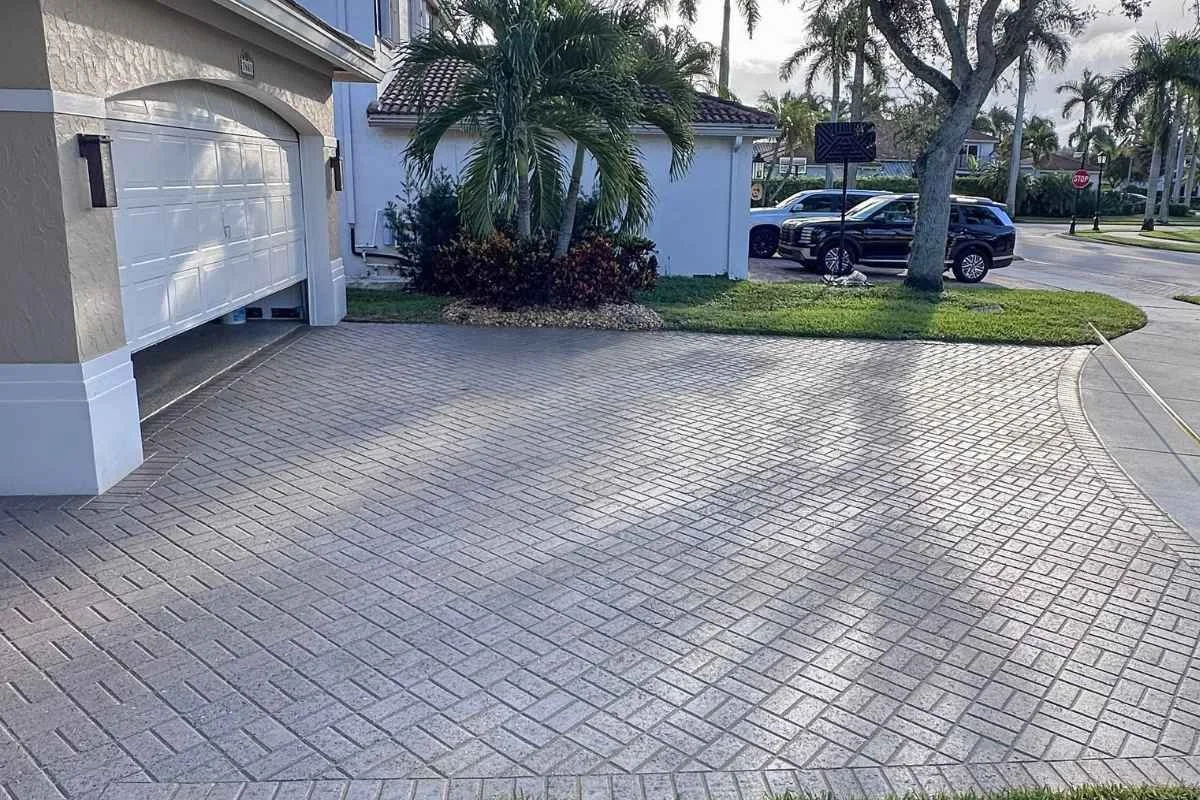
Resealing a driveway that has been treated before can require a different approach than sealing a surface for the first time.
At this residential property in Weston, Florida, the homeowner wanted to improve the appearance of the front driveway, address weeds growing in some joints, and correct areas where joint sand was missing.
According to the homeowner, several years had passed since the last sealing. He also recalled having the pavers sealed multiple times in the past, without the existing sealer ever being removed through stripping.
For this project, existing sealer removal (stripping) was part of the agreed scope before cleaning, joint sand replacement, and application of a new sealing system.
The work covered the concrete paver driveway, the walkway, and the home's front entry.
The project shows how previous surface treatments, preparation, and joint conditions can influence a professional paver resealing project.
Project Overview
Location: Weston, Florida
Property: Residential
Surface: Concrete pavers
Areas: Driveway, walkway, and front entry
Work completed: Existing sealer removal, cleaning, joint sand replacement, and resealing
Joint material: Sand graded to ASTM C144, as specified in the project scope
Sealer: Trident Hurricane CAT 5, a two-part urethane joint-stabilizing sealer
Application: Two coats
Project completed: October 29, 2026
The goal was to prepare the previously sealed pavers, address the condition of the joints, and apply a new color-enhancing sealing system across the front areas of the property.
What the Homeowner Wanted to Improve
The homeowner's concerns involved both appearance and maintenance.
The driveway had been sealed before, but several years had passed since the most recent application. He wanted to refresh the front of the property while addressing visible weeds and sections where the joint sand needed attention.
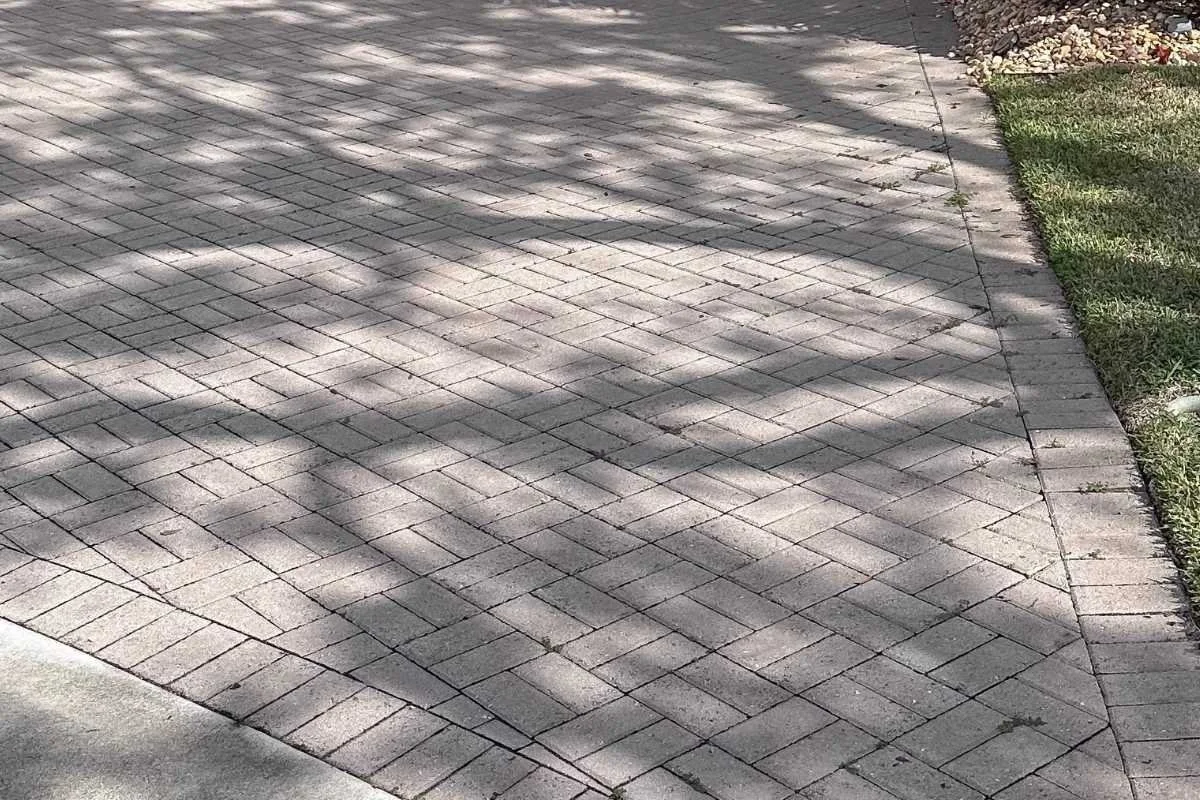
Some weeds were growing between the concrete pavers, particularly near certain edges and joints. Other areas had lost joint sand.
These conditions were localized rather than uniform across the entire driveway.
The previous sealing history was also relevant. The homeowner recalled several past applications but did not remember any previous stripping.
That made the existing surface condition an important part of evaluating the new work.
Why the Previous Sealer History Mattered
A previously sealed surface should not automatically be treated as though it has never received a protective product.
Existing sealer, previous applications, surface condition, and the desired finish can all influence the preparation required before resealing.
In this case, the agreed scope included removing the existing sealer before applying a new system.
That does not mean every resealing project requires stripping.
It also does not mean the previous sealer was necessarily peeling, chemically deteriorated, or incompatible. Those conditions were not established as part of this case.
What matters here is that the previous sealing history was considered, and existing sealer removal was included in the preparation plan for this property.
Protecting the Property Before Stripping
Preparation was not limited to the pavers themselves.
During the stripping stage, surrounding doors, windows, and walls were protected to reduce exposure of their finishes to the treatment.
This was a specific part of the work performed at the Weston property.
When a driveway or front entry is directly adjacent to the home, attention to surrounding materials is part of planning and carrying out the service.
The process needs to account for more than the surface being cleaned or sealed.
Removing the Existing Sealer and Preparing the Pavers
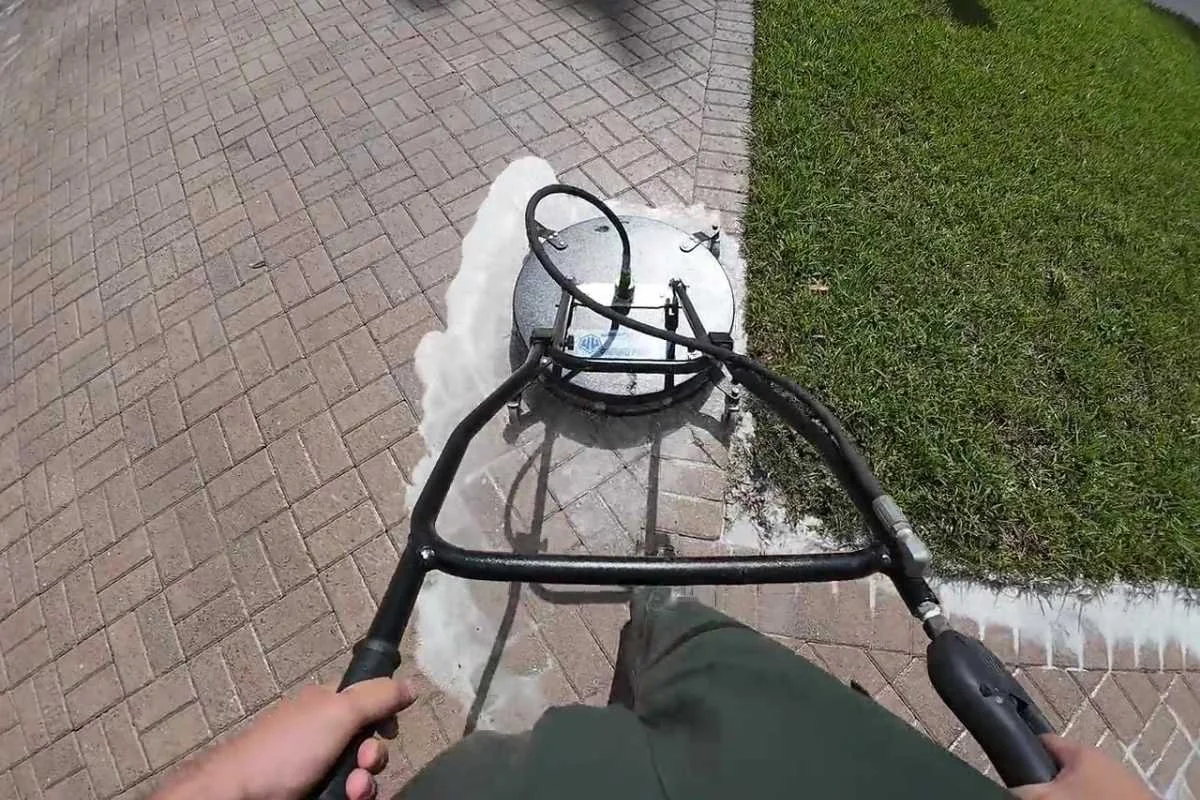
With the surrounding areas protected, the existing sealer was removed as part of the approved project scope.
The driveway, walkway, and front entry were then cleaned and prepared for the next stages.
This work addressed surface residue, localized weed growth, and the condition of the joints before new sand and sealer were applied.
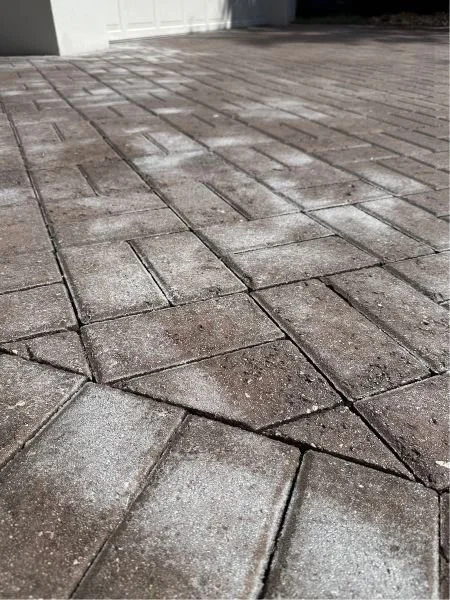
Removing the old sealer was not the final objective. It was part of preparing a previously treated surface for a new application.
The sequence matters because cleaning, joint preparation, and sealing should be considered together rather than as unrelated steps.
Replacing the Joint Sand
The joints were another important part of this project.
Some areas had missing or insufficient sand, and the homeowner specifically wanted that condition addressed.
After cleaning and preparation, joint sand was replaced using sand graded to ASTM C144, as specified in the commercial scope.
This step included the pedestrian walkway and front entry, not just the driveway.
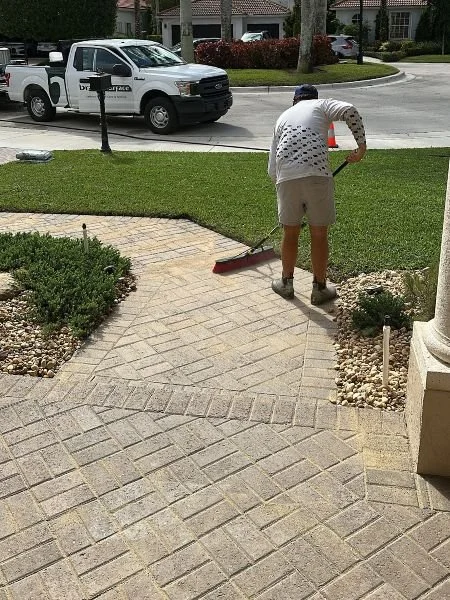
Joint sand helps fill the spaces between pavers and supports the overall joint system. Replacing missing material is an important preparation step where joints need attention.
For this Weston property, sanding was completed before the new sealer application.
The joint material was not polymeric sand. The project used the specified graded joint sand as part of the selected sealing system.
Applying the New Joint-Stabilizing Sealer
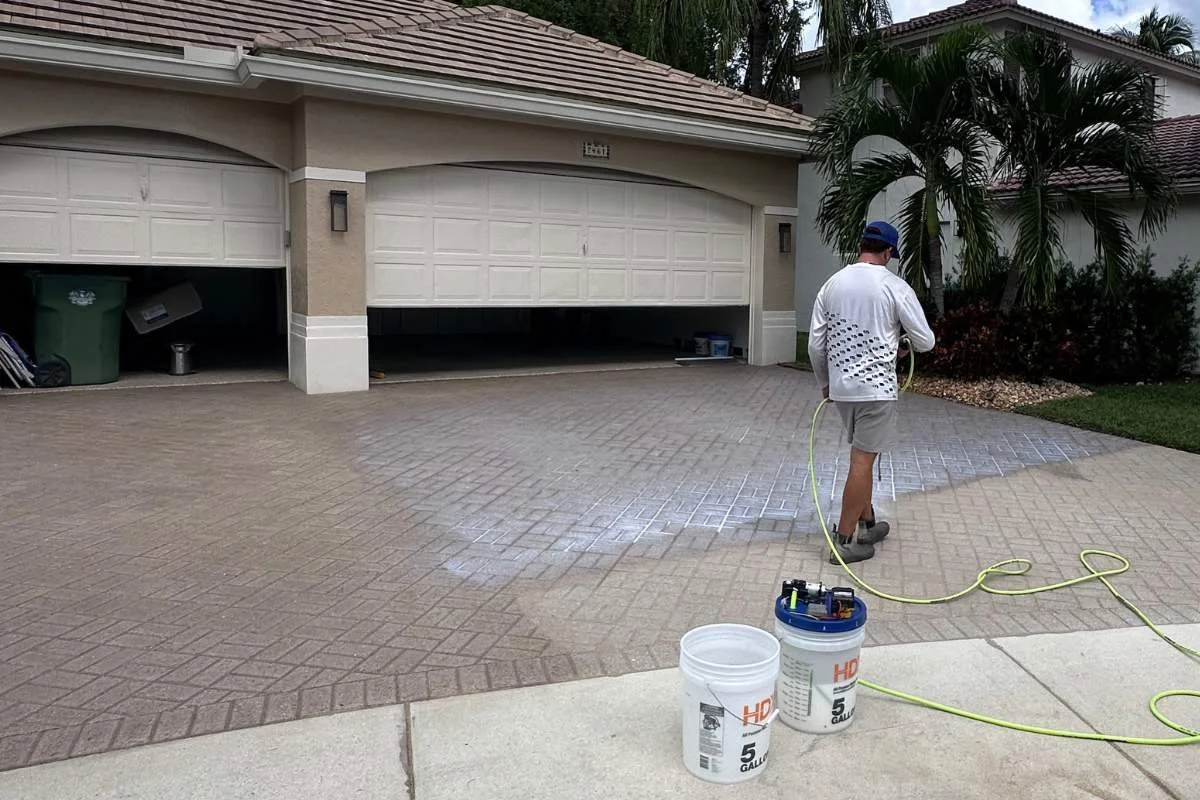
After the previous sealer was removed and the pavers were cleaned, prepared, and re-sanded, the new sealing system was applied.
The product selected for this project was Trident Hurricane CAT 5, a two-part urethane sealer designed for color enhancement and joint stabilization.
Two coats were applied.
The selected finish enhanced the appearance of the concrete pavers while the joint-stabilizing system was intended to help support the newly installed sand.
This was not simply an application over the previous finish. The work included the preparation stages required under the agreed project scope before the new sealer was applied.
As with any exterior sealing project, future performance depends on surface conditions, exposure, use, and maintenance. Sealing does not eliminate every possibility of weed growth, sand loss, or future wear.
The Result: A Refreshed Driveway, Walkway, and Front Entry
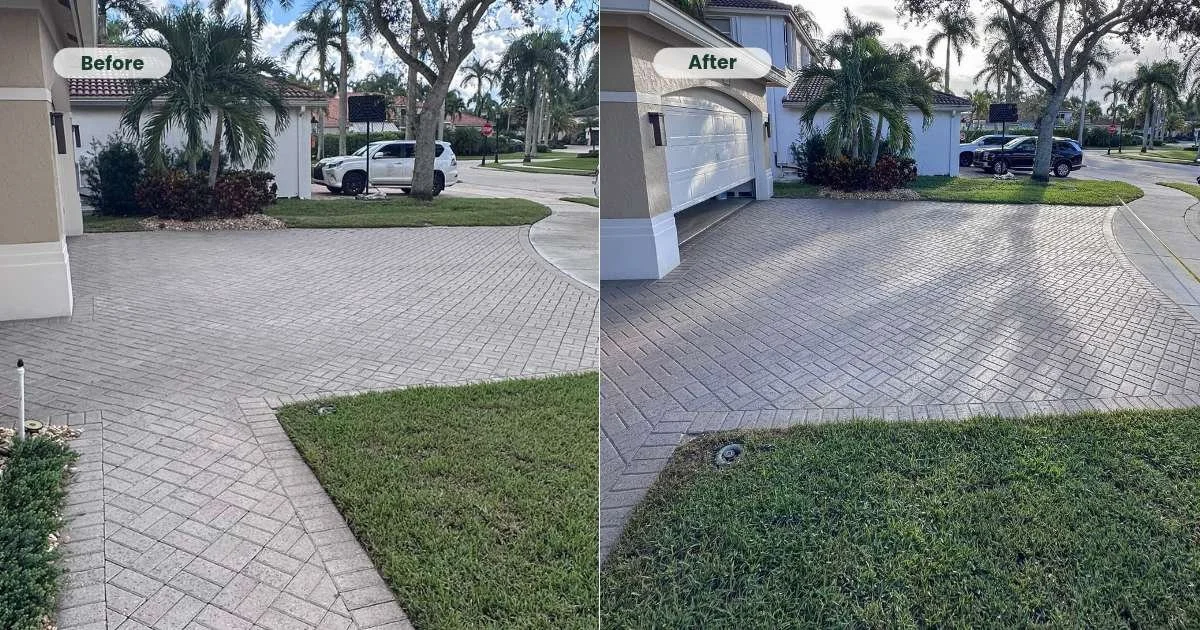
The completed project showed a refreshed appearance across the front concrete paver areas.
The driveway displayed more defined color after cleaning, preparation, and resealing. The walkway and front entry were also included in the work, creating a more consistent presentation across the property's front approach.
The joints received replacement sand, and the existing sealer was removed before the new two-coat system was applied.
The before-and-after photographs document the visible difference, although changes in light, perspective, and shadows also influence how the surfaces appear in photographs.
The important result is not only the finished appearance.
It is the preparation behind it: protecting surrounding materials, removing the existing sealer, cleaning, addressing the joints, and applying the new sealing system.
Considering paver resealing in Weston?
If your driveway has been sealed before, its history and current condition can affect what preparation is appropriate.
A professional evaluation can help determine whether your pavers need cleaning, joint sand replacement, existing sealer removal, or resealing.
What the Homeowner Said
The homeowner left a five-star Google review following the project.
One part of the review highlights the communication before the work began:
“He thoroughly explained the process, the materials he would be using and the length of time needed to complete the job.”
Weston homeowner · 5-star Google review
The review also expressed appreciation for the team's punctuality, dedication, and completed work.
That feedback reflects an important part of professional service: helping homeowners understand what is being proposed, why certain preparation steps are included, and what to expect from the project.
What This Weston Project Shows About Professional Resealing
This project illustrates why an existing paver surface should be evaluated before another sealing application is planned.
A homeowner may be primarily concerned about faded appearance, weeds, or missing joint sand. But the appropriate scope can also depend on previous treatments and the condition of the surface.
For this property, the work involved more than applying another coat over the driveway.
The existing sealer was removed, surrounding finishes were protected during stripping, the pavers and joints were cleaned and prepared, sand was replaced, and two coats of a color-enhancing joint-stabilizing sealer were applied.
Those decisions were specific to this property.
Another driveway may require a different preparation process.
The objective should always be to understand the condition of the pavers and select an appropriate treatment, rather than assume the same procedure is needed for every resealing project.
The Bottom Line
Professional paver resealing is not always just a matter of applying a fresh coat.
For this Weston homeowner, the process involved evaluating a previously sealed driveway, removing the existing sealer, addressing joint conditions, and completing a new sealing application.
The driveway, walkway, and front entry were treated as connected parts of the property's exterior.
For homeowners considering professional paver sealing in Weston, this case shows why preparation and attention to the existing surface matter alongside the final appearance.
Need help evaluating previously sealed pavers?
BravaSurface provides paver cleaning, preparation, and sealing services for residential properties in Weston and throughout Broward County.
Whether your driveway needs routine cleaning, joint sand attention, resealing, or evaluation of an existing sealer, we can review the surface and discuss an appropriate scope.