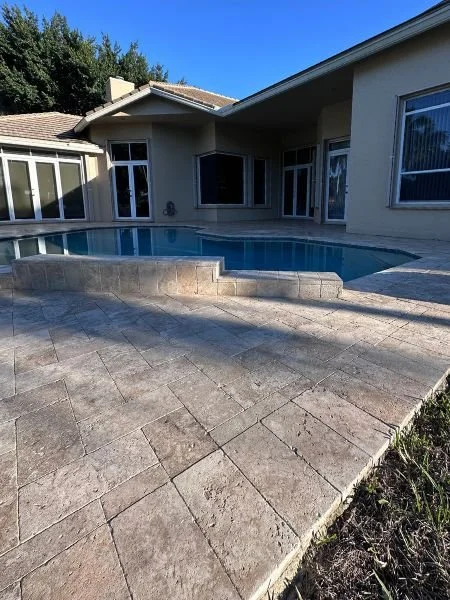
A previously sealed travertine pool deck does not always need its existing sealer removed before receiving a new treatment.
At this residential property in Weston, Florida, the travertine surrounding the pool showed buildup in its natural cavities, weeds in some joints, and areas where joint sand had been lost.
The treatment focused on refreshing the pool deck and renewing protection while preserving the travertine's natural appearance.
The project involved detailed cleaning, joint maintenance, and a penetrating sealing treatment selected for the stone's characteristics and existing condition.
Project Overview
Location: Weston, Florida
Property: Residential
Surface: Previously sealed travertine pool deck
Initial condition: Surface buildup, localized weed growth, and missing joint sand
Work performed: Travertine cleaning and preparation, polymeric sand replacement where needed, and penetrating sealer application
Sealer used: Trident Break Wall, a water-based penetrating sealer
Application: Two applications
Finish: Natural appearance with water-repellent protection
This work was part of a larger exterior surface care project that also included the concrete paver driveway at the front of the home.
What We Found on the Travertine Pool Deck
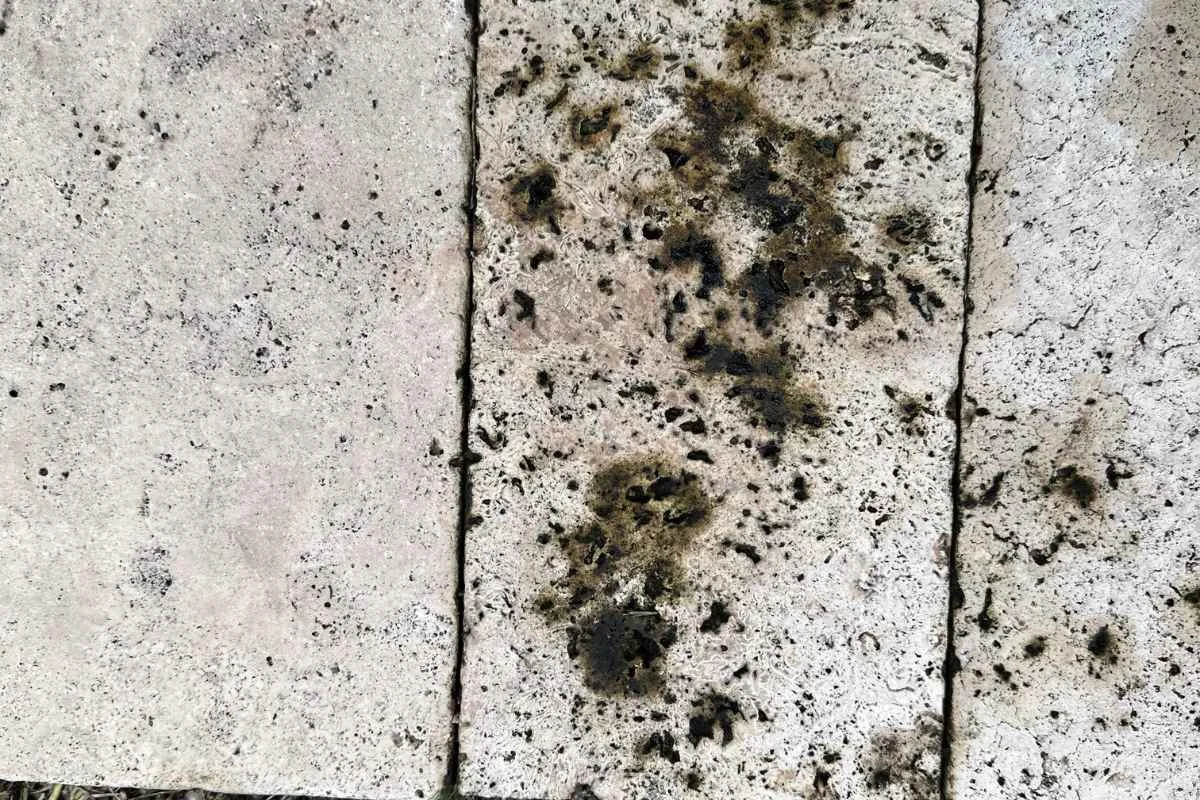
Before cleaning, the travertine showed visible buildup in its natural pores and cavities, contributing to a darker, less uniform appearance in some areas.
The joints also needed attention. Localized weeds were growing between some stones, while other sections had lost joint sand.
These conditions involved two different parts of the surface: the travertine itself and the joint material between the stones.
The pool deck had been sealed previously, but this project did not require stripping.
That was different from the concrete paver driveway at the same property, where existing sealer removal was included in the scope.
The distinction is important because previous sealing does not automatically determine the treatment required. The material, surface condition, and existing protection all need to be considered.
Cleaning the Travertine and Addressing Surface Buildup
Travertine has natural texture, pores, and small cavities that contribute to its distinctive appearance.
These features can also collect dirt and outdoor buildup, particularly around pool areas exposed to moisture, landscaping, and regular use.
For this project, the cleaning focused on removing accumulated buildup and improving the overall appearance of the existing stone.
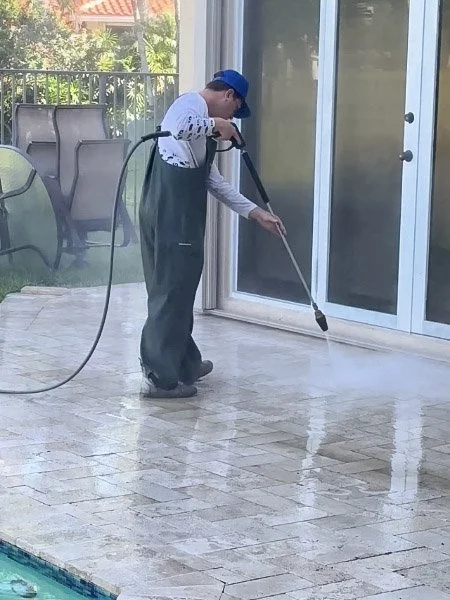
The objective was not to eliminate its natural variations or create a completely uniform finish.
It was to clean the travertine while respecting its texture and character, preparing the surface for continued outdoor use and protective treatment.
Joint Maintenance: Weeds and Missing Sand
The condition of the joints was another important part of the project.
Some areas showed localized weed growth, while others had missing or insufficient joint sand.
We replaced missing joint sand using polymeric sand as part of the pool deck maintenance.
Joint material helps fill the spaces between individual stones and supports the maintenance of the overall surface.
This work addresses a different need from sealing the travertine itself. Replacing joint sand helps address joint conditions, while the penetrating sealer is intended to protect the stone.
Neither treatment eliminates the need for future maintenance, particularly in South Florida's humid outdoor environment.
Sealing With a Natural-Look Penetrating Sealer
We treated the travertine with two applications of Trident Break Wall, a water-based penetrating sealer selected to provide water repellency while preserving the stone's natural appearance.
Break Wall is a breathable, non-film-forming sealer designed to penetrate the material rather than create a visible coating on top.
For this pool deck, the objective was to renew protection without producing an intense color-enhancing or glossy finish.
The selected treatment helps reduce water penetration while allowing the travertine's natural texture and color variations to remain visible.
This approach was appropriate for the intended appearance of the pool deck and the characteristics of the existing stone.
Water Beading on the Treated Travertine
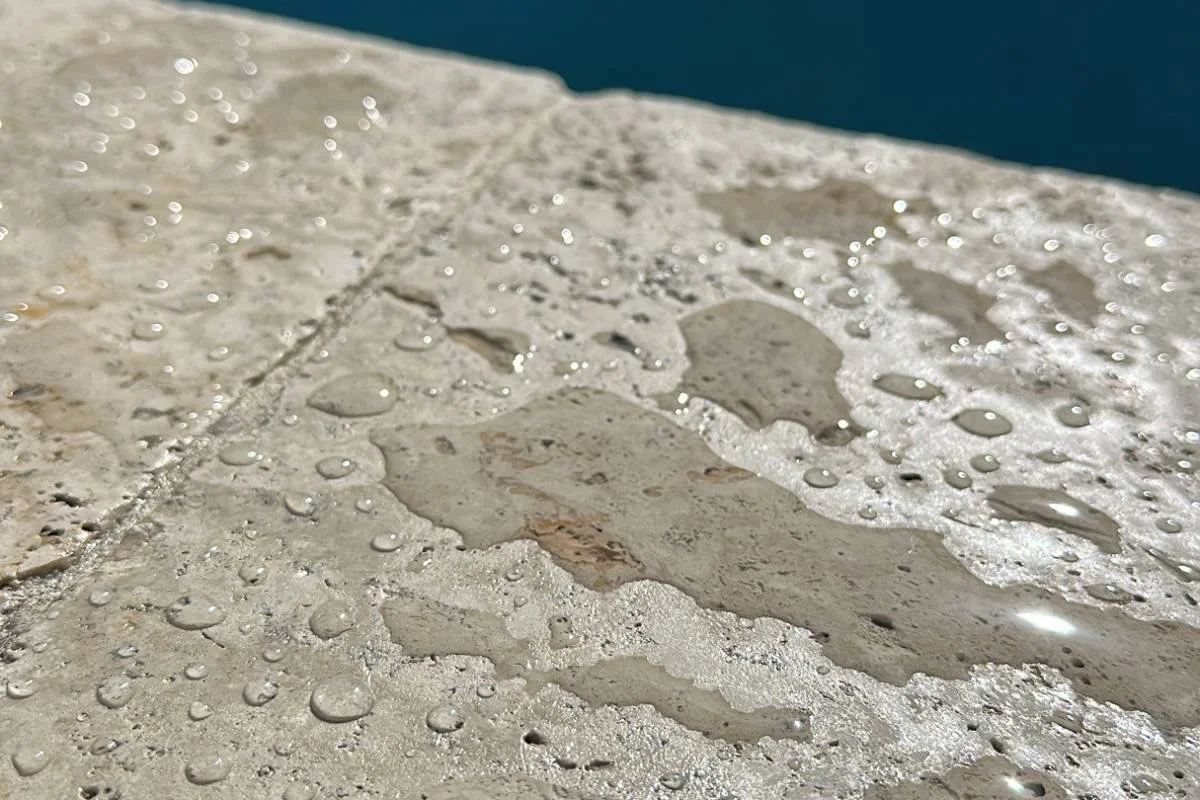
Close-up footage from the project shows water beading on the treated travertine.
The droplets illustrate the water-repellent behavior visible at the time of recording.
Water repellency does not make the stone fully waterproof or eliminate the need for ongoing maintenance.
What Changed After the Project
The completed pool deck showed a cleaner, more visually consistent appearance.
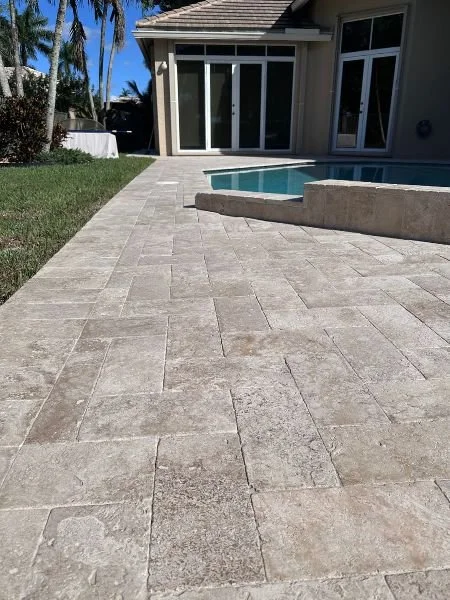
Buildup that had been visible in the stone's pores and cavities was addressed, and missing joint sand was replaced where needed.
The travertine also received a penetrating protective treatment without creating a glossy surface coating.
The finished appearance retained the natural color variations and texture of the stone.
Project photographs document the initial condition and completed surface, while the water-beading footage provides a separate view of the treatment's water-repellent behavior.
Planning Care for Your Travertine Pool Deck in Weston?
Buildup, missing joint sand, and previous sealing can all influence the work your pool deck needs.
Explore our natural stone cleaning and sealing services in Weston to learn more about our approach.
Share photos of your stone and joints, along with any information about previous treatments, so we can discuss your project.