Travertine Pool Deck Cleaning and Sealing in Coral Springs: A Real Patio Project
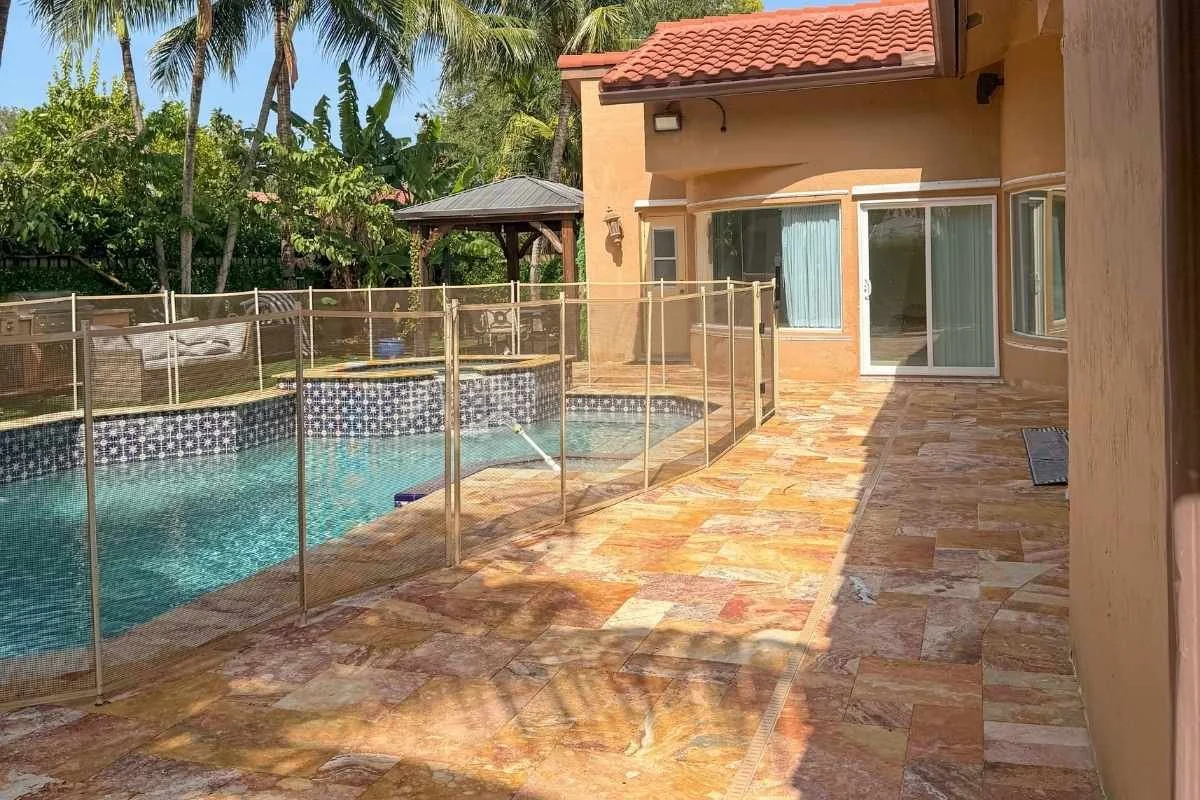
Travertine pool deck and patio after controlled cleaning, joint preparation, and penetrating sealer application in Coral Springs.
Travertine pool decks require a different approach than concrete driveways or standard brick pavers.
Natural stone is porous, textured, and exposed to constant moisture, heat, shade, irrigation, foot traffic, and organic buildup — especially around pool areas in South Florida.
On this Coral Springs property, the travertine pool deck and patio needed more than a surface wash.
The project included controlled cleaning, joint preparation, loose stone correction, polymeric sand installation where needed, and penetrating sealer application across approximately 1,885 square feet.
This project is a good example of why travertine cleaning and sealing should be treated as a surface-specific process — not as a quick cleaning or coating.
For homeowners considering travertine and natural stone sealing in Broward County, the right result depends on understanding the stone, the joints, the moisture exposure, and the preparation needed before sealing.
Project Overview
Location: Coral Springs, Florida
Surface: Travertine pool deck and patio
Project size: Approximately 1,885 sq. ft.
Work performed: Controlled cleaning, joint preparation, loose stone correction, polymeric sand installation where needed, and penetrating sealer application
Sealer used: Trident Sea Wall penetrating sealer
The goal was to clean and prepare the travertine, address unstable areas where stones had loosened, restore joint support where needed, and apply a penetrating sealer suited for natural stone.
This was not just about improving appearance.
It was about preparing the surface correctly before protection was applied.
Why Travertine Needs a Different Approach
Travertine is a natural stone, which means every surface can respond differently depending on age, porosity, exposure, previous maintenance, drainage, joint condition, and how the area is used.
Around a pool deck, those variables become even more important.
Travertine pool decks are exposed to pool water, irrigation, humidity, organic buildup, sun, heat, shaded areas, foot traffic, furniture movement, drainage patterns, and joint movement over time.
Because of that, travertine should not be treated the same way as plain concrete.
Aggressive cleaning, poor preparation, or sealing before the surface is ready can affect the final appearance and performance of the stone.
That is why the process should begin with evaluation.
Before sealing, the surface needs to be reviewed for buildup, joint condition, loose stones, moisture exposure, and areas that may need additional preparation.
What We Found Before Cleaning
Before cleaning, the travertine patio showed several conditions that needed attention.
The joints had visible buildup, weeds, and areas without proper support. Some sections showed dirty joint lines and organic debris. In one corner, part of the system had become unstable, and several stones had separated or loosened.
That condition matters.
Loose travertine stones are not just a cosmetic issue. They can indicate that the joint system has lost stability in that area, which should be addressed before sealing.
Applying sealer over an unstable surface does not correct movement, open joints, or loose stone sections.
For this project, preparation came first.
The surface needed to be cleaned, the joints needed attention, loose areas needed correction, and polymeric sand was installed where needed before the penetrating sealer was applied.
Why Loose Stones Matter Before Sealing
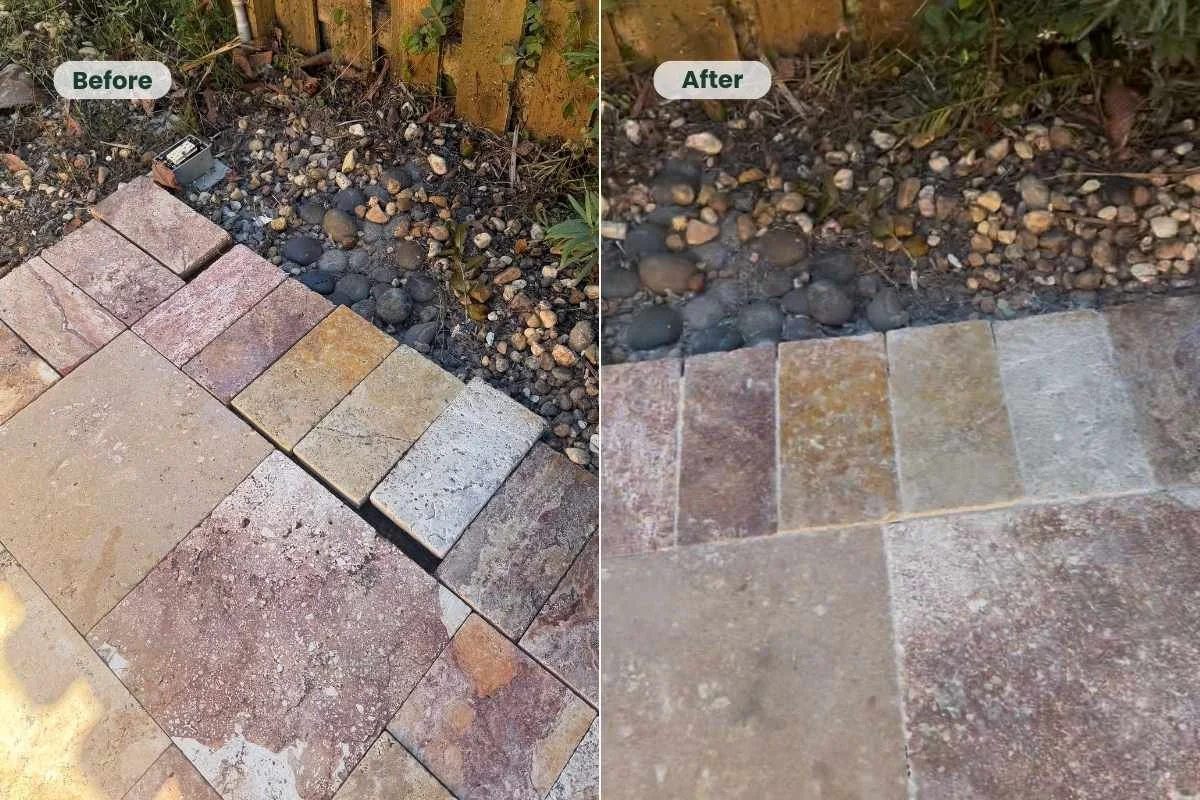
Before and after of a loose travertine stone area that was corrected as part of the cleaning, joint preparation, and sealing process.
Sealer is not designed to hold an unstable surface together.
When travertine stones are loose, separated, or moving, the surface should be evaluated before sealing. Otherwise, the sealer may be applied over a system that still needs preparation.
In this project, loose stone areas were addressed as part of the preparation process.
That step helped create better conditions for the cleaning, joint work, sand installation, and sealing that followed.
This is especially important on pool decks and patios because the surface is not just decorative. It is a high-use outdoor area exposed to water, movement, shade, heat, and daily foot traffic.
Before sealing travertine, the surface should be stable enough to receive the product properly.
That is why surface preparation is not a secondary step.
It is part of the sealing system.
Not Sure If Your Travertine Is Ready for Sealing?
Loose stones, dirty joints, weeds, moisture exposure, and surface buildup can affect how a pool deck should be cleaned, prepared, and sealed.
A surface evaluation can help determine whether your travertine needs cleaning, joint preparation, loose stone correction, sealing, or additional restoration before protection is applied.
Detailed Cleaning and Joint Preparation
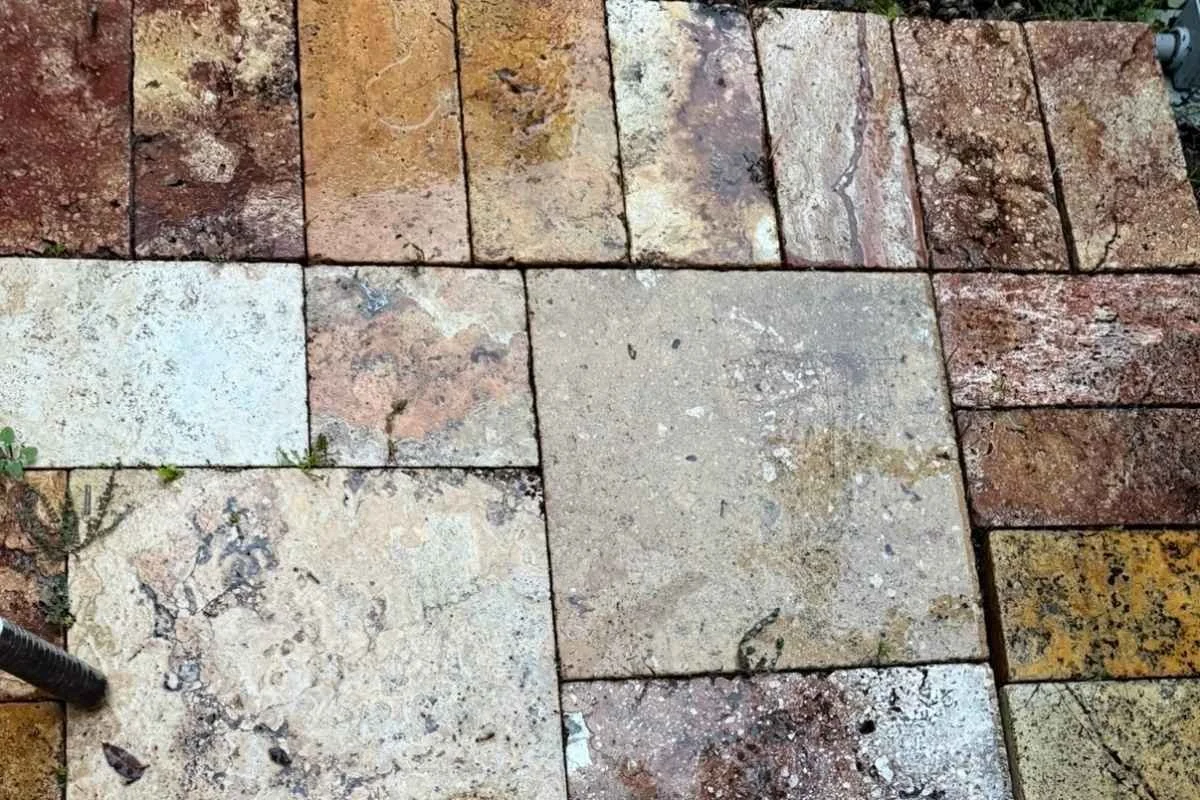
The travertine joints showed buildup, weeds, and areas that needed preparation before sealing.
The travertine patio and pool deck were cleaned and prepared according to the approved project scope.
The process focused on removing surface buildup, clearing dirty joints, preparing unstable areas, and getting the natural stone ready for the next steps.
For travertine, cleaning needs to be controlled and surface-specific.
The goal is not simply to wash harder.
The goal is to remove buildup while respecting the natural stone and preparing the surface for joint work and sealing.
On this project, the joints were an important part of the work. They showed buildup, weeds, and areas where support was missing or inconsistent.
Cleaning helped reveal the real condition of the surface so the preparation could continue properly.
For broader outdoor areas that need cleaning before sealing is considered, BravaSurface also provides exterior surface cleaning in Broward County.
Polymeric Sand Installation Where Needed
After cleaning and joint preparation, polymeric sand was installed where needed.
Joint sand plays an important role in many hardscape systems. It helps support the joints, reduce movement, and create a more stable surface when installed under the right conditions.
On this travertine project, polymeric sand was not used as a cosmetic detail.
It was part of the preparation system.
The areas that needed joint support were addressed before sealing so the surface could be protected under better conditions.
Polymeric sand does not make a surface maintenance-free, and it does not eliminate every future weed or movement issue. But when used properly, it can help improve joint stability and support the overall surface system.
Sealing With a Penetrating Sealer
After cleaning, joint preparation, and polymeric sand installation where needed, the travertine was sealed with Trident Sea Wall, a solvent-based penetrating sealer made with a silane/siloxane blend.
This type of sealer is designed to penetrate the surface rather than form a visible film on top of the stone.
For travertine, that distinction matters.
A non-film-forming penetrating sealer can help reduce water absorption, limit salt and chloride intrusion, and protect the surface while keeping the natural appearance of the stone.
On a pool deck, that balance is important.
The surface needs protection from moisture, pool water, irrigation, heat, and daily use — but it also needs to remain visually consistent with the natural character of travertine.
The goal was not to create a glossy coating.
The goal was to help protect the travertine while allowing the stone to keep its natural look and texture.
For this project, sealing was the final step after the surface was cleaned, prepared, stabilized where needed, and allowed to receive the product properly.
What Changed After Cleaning and Sealing
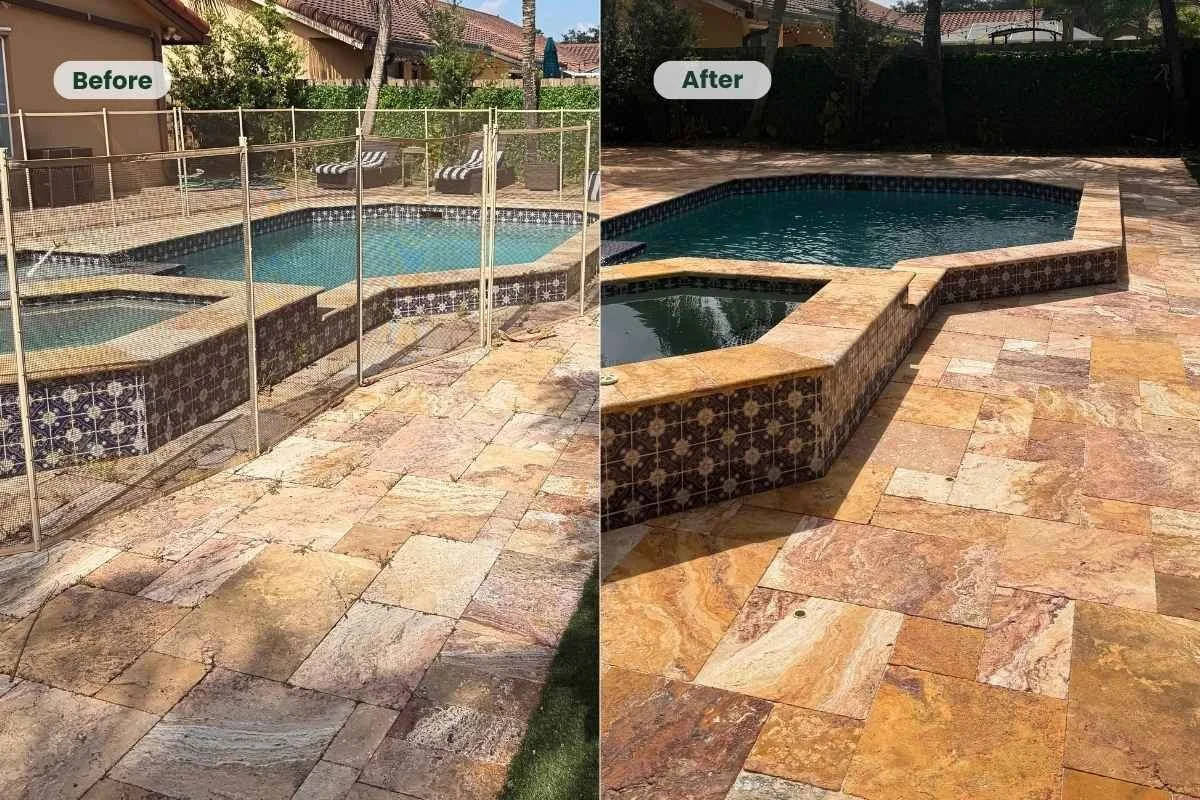
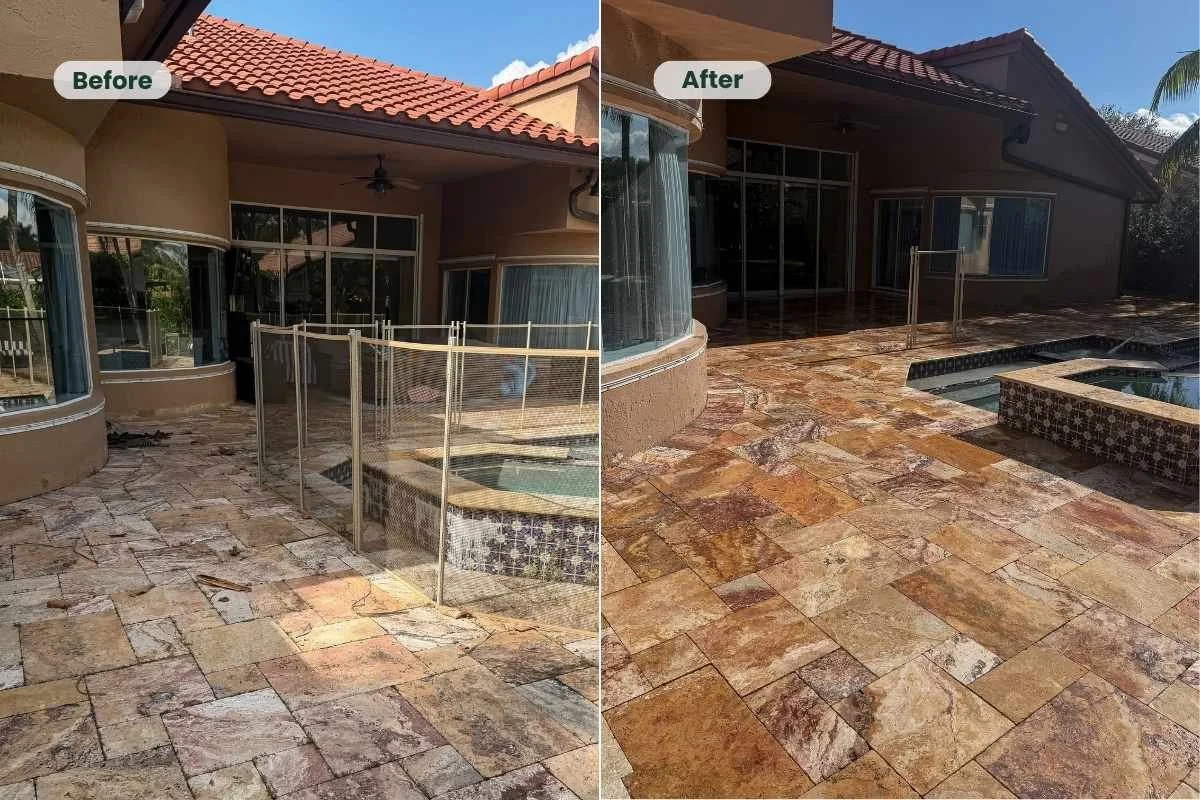
Before and after of the travertine pool deck and patio after controlled cleaning, joint preparation, and penetrating sealer application.
After the project, the travertine pool deck and patio had a cleaner, more defined appearance.
The stone color became more visible. The joints looked cleaner and more consistent. Loose areas had been addressed, and the surface was sealed with a penetrating product selected for natural stone protection.
The result was not about making the travertine look artificial.
It was about helping the surface look cared for, properly prepared, and better protected for outdoor use.
The before-and-after difference shows why travertine maintenance is not just about washing the surface.
Cleaning, joint preparation, loose stone correction, polymeric sand installation where needed, and sealing all worked together.
What Homeowners Can Learn From This Project
This Coral Springs project shows several important points about travertine pool deck care.
First, travertine should be evaluated before cleaning or sealing. Natural stone can have different levels of porosity, wear, buildup, moisture exposure, and joint instability.
Second, dirty joints and weeds are not just visual issues. They may indicate that the surface needs deeper preparation before protection is applied.
Third, loose stones should be addressed before sealing. Sealer is not a replacement for surface stability or joint correction.
Fourth, the type of sealer matters. A penetrating sealer can help protect the stone without creating a visible surface film or changing the natural character of the travertine.
Finally, the best results usually come from treating the surface as a system.
Cleaning prepares the stone.
Joint work supports the surface.
Sealing helps protect the material after preparation.
Each step matters.
Travertine Pool Decks in South Florida Need Surface-Specific Care
In South Florida, outdoor surfaces are exposed year-round.
Humidity, rain, irrigation, pool water, shade, heat, and organic debris all affect how travertine looks and performs over time.
That is why a pool deck may need more than occasional cleaning.
A travertine patio or pool deck may need professional attention when joints are dirty or open, weeds are growing between stones, stones feel loose or unstable, the surface looks dark or uneven, water absorbs quickly into the stone, previous protection has worn down, organic buildup returns quickly, or the stone has lost definition.
These signs do not always mean the surface needs the same solution.
Some areas may need cleaning.
Some may need joint preparation.
Some may need loose stone correction.
Some may be ready for sealing.
Others may need more preparation before sealing should be considered.
That is why evaluation is the first step.
Cleaning vs. Sealing Travertine
Cleaning and sealing are connected, but they are not the same service.
Cleaning addresses buildup, dirt, organic material, stains, and surface condition.
Sealing helps protect the stone after it has been properly cleaned and prepared.
If travertine is sealed before cleaning, joint preparation, or loose stone correction, the final result may be affected.
For that reason, travertine sealing should not be treated as a quick final coat.
It should be part of a complete process that starts with the actual condition of the surface.
For homeowners comparing cleaning and sealing options, the most important question is not only:
“What finish do I want?”
It is also:
“Is the surface ready to be sealed?”
Frequently Asked Questions
Does travertine need to be sealed?
Travertine is a porous natural stone, so sealing may help protect it from moisture, staining, and outdoor exposure. However, the surface should be evaluated first to determine whether it needs cleaning, joint preparation, loose stone correction, or drying time before sealing.
Can loose travertine stones be sealed over?
Loose stones should usually be addressed before sealing. Sealer is not designed to stabilize moving or separated stones. If parts of the surface are unstable, those areas should be evaluated and corrected before protection is applied.
What type of sealer was used on this project?
This project used Trident Sea Wall, a solvent-based penetrating sealer made with a silane/siloxane blend. It is a non-film-forming penetrating sealer used to help protect the surface while preserving the natural look of the material.
Will a penetrating sealer make travertine glossy?
A penetrating sealer is not designed to create a visible glossy coating like some topical sealers. It is used to help protect the surface while maintaining a more natural appearance.
Why was polymeric sand used?
Polymeric sand was installed where needed to help support the joint system after cleaning and preparation. It can help improve joint stability when installed under the right conditions, but it does not make the surface maintenance-free.
How often should travertine be cleaned and sealed?
There is no single schedule that applies to every travertine surface. Timing depends on exposure, moisture, shade, traffic, previous maintenance, sealer condition, and how the surface responds over time. A surface evaluation can help determine whether cleaning, sealing, or additional preparation is needed.
Is travertine different from brick pavers?
Yes. Travertine is a natural stone, while brick or concrete pavers are manufactured hardscape materials. Travertine may respond differently to moisture, cleaning methods, sealer products, and environmental exposure. That is why natural stone should be evaluated before selecting a preparation and sealing approach.
The Bottom Line
Travertine pool deck care is not just about cleaning the surface.
And sealing is not just about applying a product.
On this Coral Springs project, the travertine patio and pool deck needed a complete preparation process: controlled cleaning, joint preparation, loose stone correction, polymeric sand installation where needed, and penetrating sealer application.
The project shows why natural stone surfaces should be evaluated before they are cleaned or sealed.
Every surface responds differently.
And with travertine, the right result depends on understanding the stone, the joints, the moisture exposure, and the preparation needed before protection is applied.
Need help evaluating a travertine pool deck or patio?
A surface evaluation can help determine whether your natural stone needs cleaning, joint preparation, loose stone correction, sealing, or additional restoration before protection is applied.