Common Driveway Stains in South Florida and What They Mean
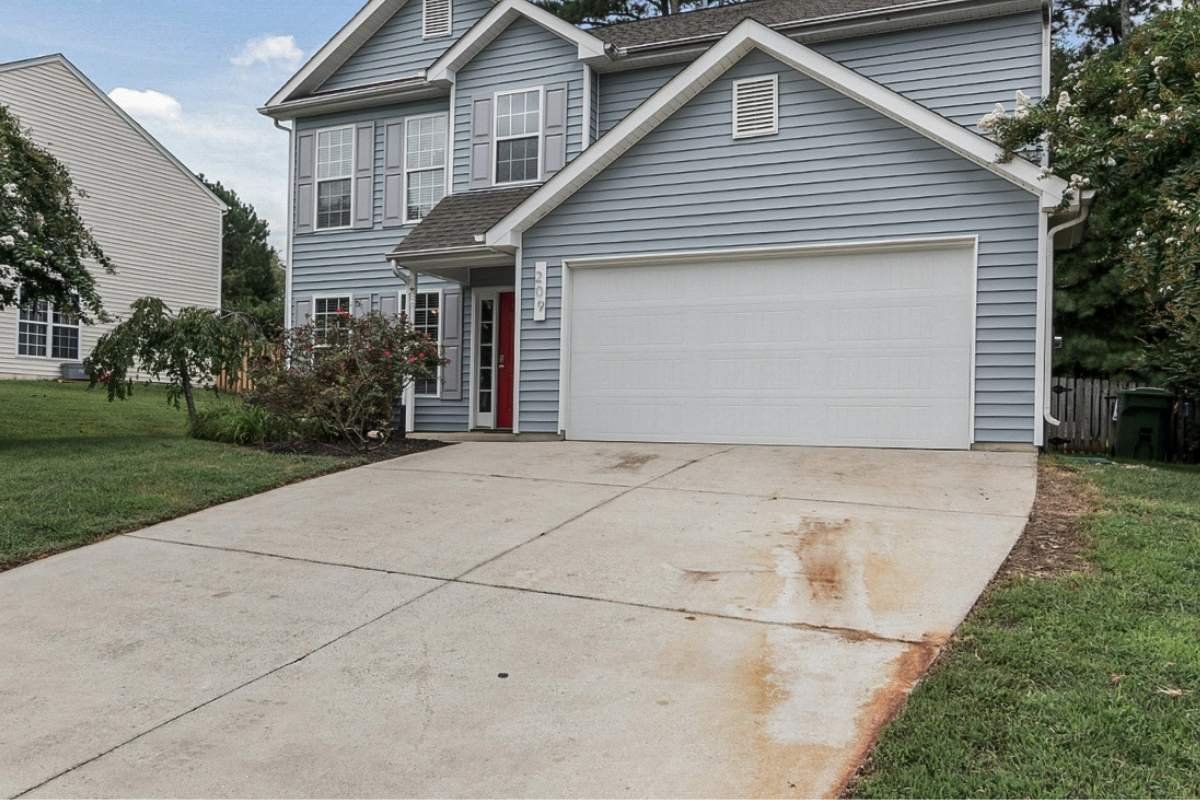
Driveway stains are not all the same.
Some marks come from daily use. Others are connected to moisture, shade, landscaping, vehicles, irrigation, or the way the surface absorbs residue over time.
In South Florida, driveways are constantly exposed to heat, rain, humidity, organic buildup, tire traffic, oil, minerals, and runoff from nearby landscaping. That combination can make stains appear faster — and return sooner — than many homeowners expect.
The important question is not only:
Why does my driveway look stained?
It is also:
What is the stain telling me about the condition of the surface?
Understanding the difference can help determine whether the driveway needs routine cleaning, targeted stain treatment, or a more complete surface evaluation.
Not sure what your driveway stains mean?
Some stains are surface-level. Others may need targeted treatment before cleaning. A closer look can help determine the right next step.
Why Driveways Stain So Easily in South Florida
Driveways in South Florida deal with a specific combination of conditions.
Frequent rain, high humidity, strong sun, shaded areas, irrigation, vehicle traffic, and nearby plants all affect how the surface looks over time.
Concrete and paver driveways are both porous to some degree. That means they can hold moisture, residue, and contaminants within the surface texture.
Over time, stains may become more visible because of:
oil or fluid leaks
tire marks
leaf and plant residue
fertilizer or irrigation runoff
rust from metal objects or sprinkler systems
algae or organic growth
dirt settling into porous areas
repeated rain carrying material across the surface
In Broward County, this is especially common on driveways that stay shaded, receive frequent irrigation, or collect runoff near landscaping beds, garages, sidewalks, or street edges.
Oil and Vehicle Fluid Stains
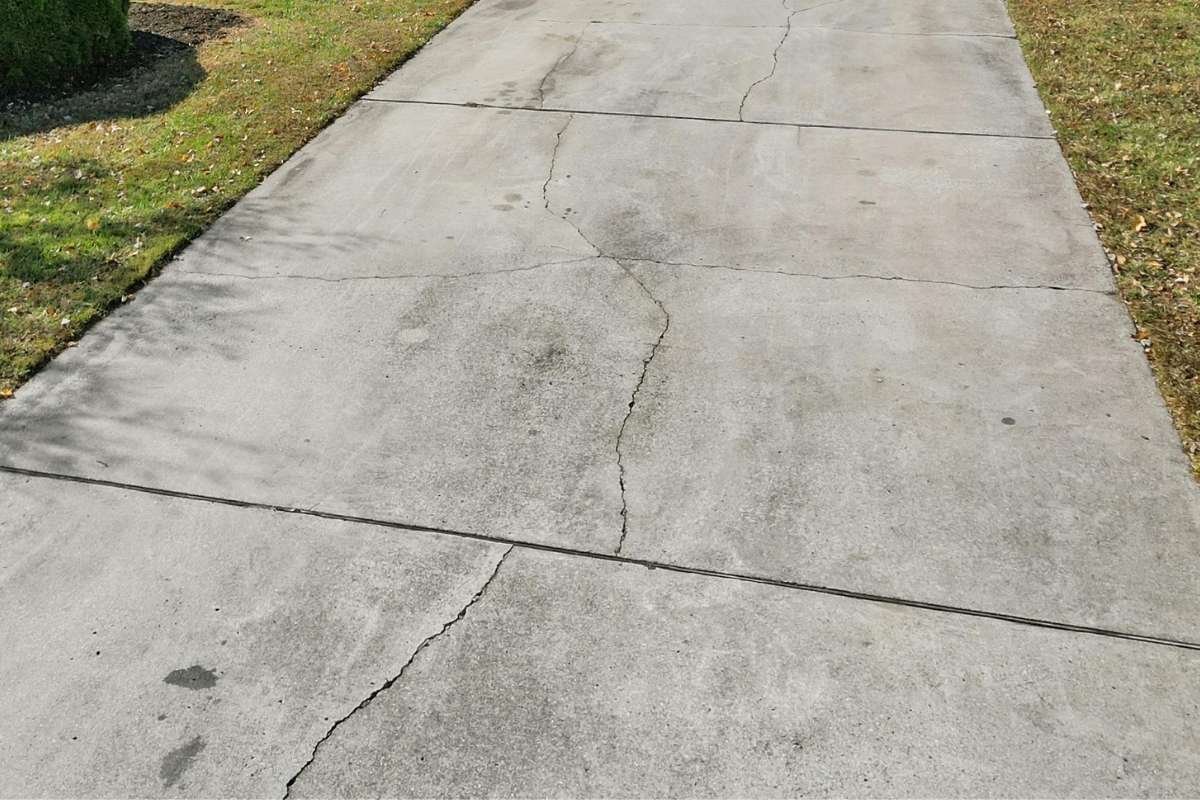
Oil stains are one of the most common driveway concerns.
They usually come from parked vehicles, small leaks, maintenance work, or residue that sits on the surface too long.
Fresh oil may stay closer to the surface. Older oil can penetrate deeper, especially on porous concrete or unsealed pavers.
Oil stains may look:
dark
irregular
concentrated under parking spots
darker after rain
more visible on lighter concrete or pavers
These stains often need more than water pressure alone.
A proper driveway cleaning process may require pre-treatment before pressure washing, especially when oil has had time to absorb into the surface.
The longer oil sits, the harder it can be to reduce its appearance.
Tire Marks and Rubber Transfer
Tire marks are different from oil stains.
They are often caused by rubber transfer, heat, turning tires, vehicle weight, or repeated parking in the same location.
On South Florida driveways, heat can make tire marks more noticeable, especially on lighter concrete, sealed surfaces, or areas exposed to direct sun.
Tire marks may appear as:
dark curved lines
repeated marks near parking areas
black or gray surface residue
marks near garage entries
heavier buildup where vehicles turn
Not all tire marks respond the same way to cleaning.
Some are mostly surface-level. Others may require a stronger cleaning approach, heat, or targeted treatment depending on the surface and how long the marks have been there.
Rust, Irrigation, and Fertilizer Stains
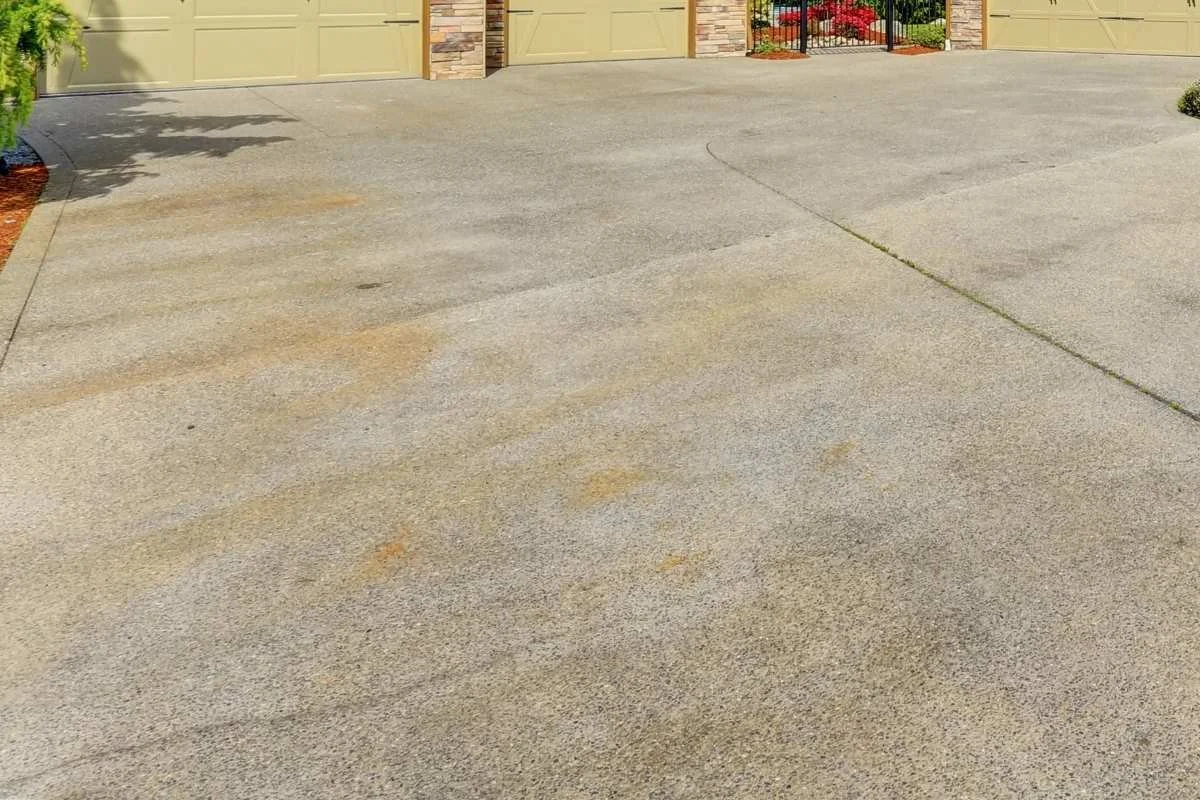
Orange or brown stains on driveways often come from minerals, irrigation, fertilizer, metal furniture, tools, or decorative objects.
These stains are common near:
sprinkler spray zones
planter areas
metal edging
garden tools
outdoor furniture
driveway borders
garage areas
Rust and mineral stains usually need a different treatment approach than organic buildup or dirt.
Using only pressure may not fully address the stain because the issue is chemical, not just surface debris.
That is why identifying the stain type matters before cleaning.
The wrong method can be ineffective, and in some cases may affect the surface appearance if the material is sensitive.
Leaf, Plant, and Organic Stains
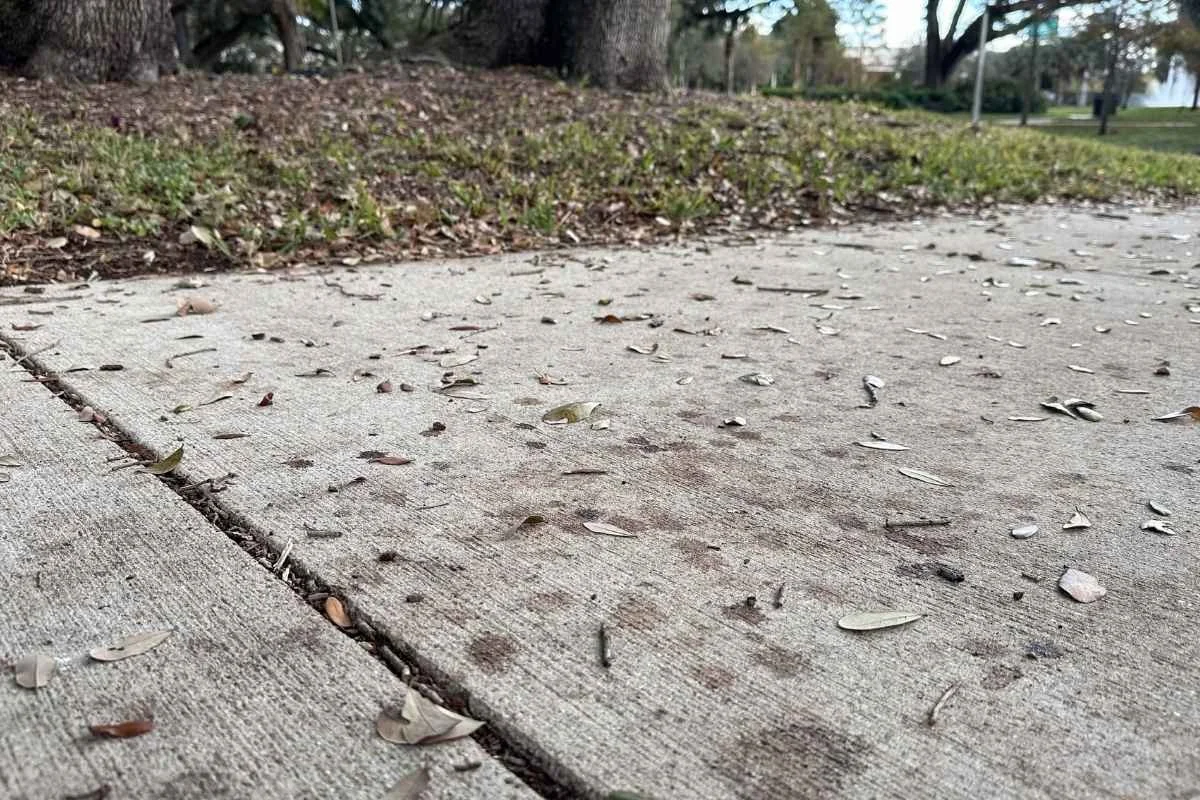
Driveways near trees, hedges, palms, planters, or mulch beds often develop organic marks.
These may come from:
fallen leaves
berries
mulch
plant tannins
algae
mildew
soil runoff
wet debris sitting on the surface
Organic stains often become more visible after rain because moisture activates or darkens the residue.
They may appear green, brown, black, or uneven depending on the material and exposure.
In shaded areas, organic buildup can also make the surface feel slick when wet.
For these stains, cleaning is not only about appearance. It can help remove the buildup that holds moisture and makes the driveway look dirty again soon after rain.
Dark Areas After Rain
Some driveway stains are not caused by one specific spill or object.
Sometimes the issue is moisture behavior.
After rain, some areas may stay darker longer than others. This can happen because of:
shade
poor drainage
porous concrete
worn or uneven surface protection
dirt embedded in surface texture
organic buildup holding moisture
runoff patterns from landscaping or gutters
If a dark area disappears as the driveway dries, it may simply be moisture.
If the same areas stay dark, dirty, or slippery after repeated rain, the surface may need cleaning or closer evaluation.
These patterns can reveal how water moves across the property and how rain affects outdoor surfaces.
Why Pressure Washing Alone May Not Be Enough
Pressure washing can be an important part of driveway cleaning.
But not every driveway stain is solved by pressure alone.
Different stains respond to different methods.
Oil, rust, organic buildup, tire marks, fertilizer stains, and mineral deposits all behave differently on concrete, pavers, and other driveway surfaces.
In some cases, driveway cleaning may require:
pre-treatment
stain-specific treatment
controlled pressure
hot water for difficult residue
post-treatment for organic buildup
proper rinsing
surface-specific care
Using too much pressure without the right preparation can also create uneven results or damage certain surfaces.
The goal is not simply to wash harder.
The goal is to use the right process for the stain, surface, and condition.
Driveway stains need the right process — not just more pressure.
If stains keep coming back or do not respond to rinsing, professional driveway cleaning can help identify what kind of treatment may be needed.
When Driveway Cleaning Makes Sense
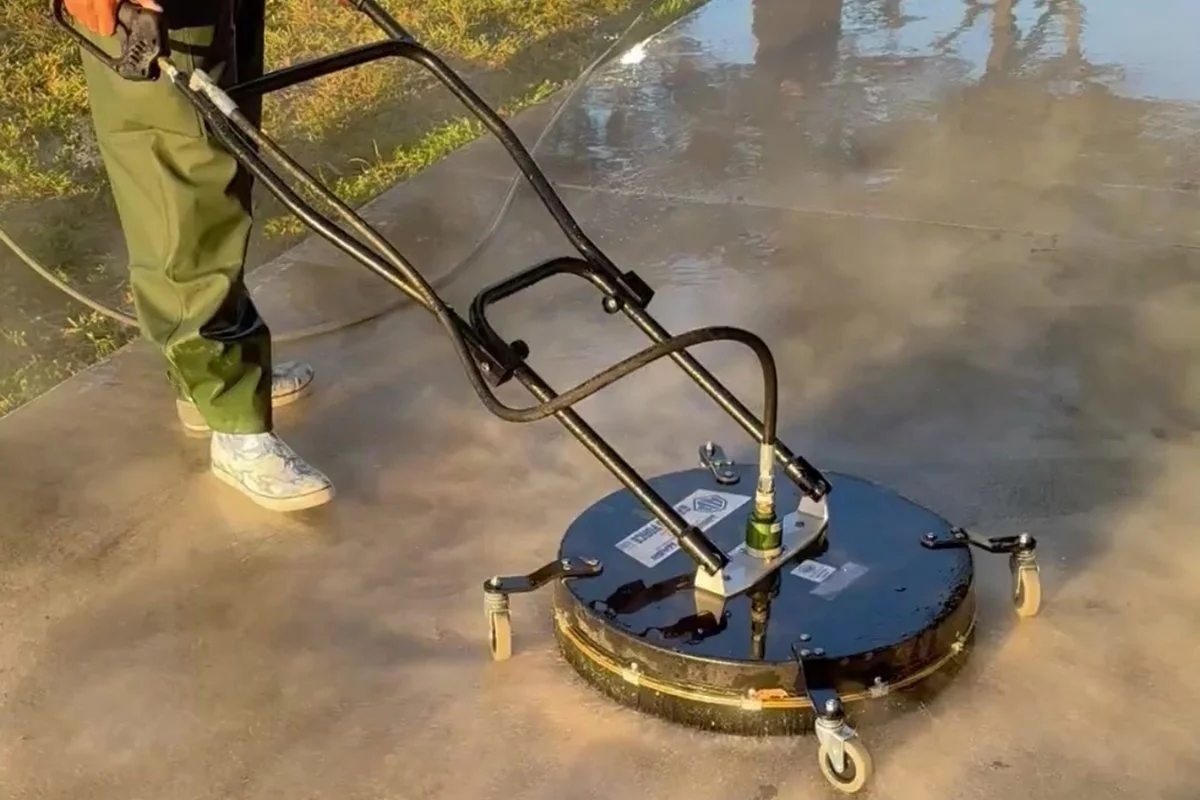
Professional driveway cleaning may be the right next step when:
stains are visible after rain
oil or tire marks have built up
algae or organic growth keeps returning
the driveway looks uneven even after rinsing
rust or fertilizer stains are visible
shaded areas stay dark or slick
the driveway affects curb appeal
multiple stain types are present
For homeowners in Coral Springs, Parkland, Coconut Creek, Weston, Davie, and nearby Broward County communities, driveway cleaning can be especially useful during the humid months when rain, shade, and organic buildup are more active.
A professional cleaning process can help restore visibility, reduce buildup, and identify whether any additional treatment or surface protection should be considered later.
What Proper Driveway Cleaning May Include
A driveway cleaning process should be based on the condition of the surface.
Depending on the driveway, this may include:
surface inspection
removal of loose debris
pre-treatment for organic buildup or stains
pressure washing with controlled technique
hot water for difficult residue when appropriate
spot treatment for specific stains
post-treatment when needed
final rinse and review
Not every exterior surface cleaning requires the same process.
A lightly soiled driveway may only need routine cleaning.
A driveway with oil, tire marks, rust, organic buildup, and moisture patterns may require a more targeted approach.
Can Cleaning Prevent Stains From Coming Back?
Cleaning can reduce buildup and improve the appearance of the driveway, but it does not stop every stain from returning.
Some stains are connected to ongoing conditions, such as:
vehicle leaks
irrigation overspray
shaded areas
tree coverage
mulch runoff
frequent rain
porous surface material
lack of maintenance
That is why maintenance matters.
Keeping debris off the driveway, addressing vehicle leaks, adjusting irrigation, and cleaning before buildup becomes heavy can help reduce recurring stains.
In some cases, surface sealing and protection may be considered after cleaning, especially when the driveway is porous, absorbs stains quickly, or needs added long-term protection.
How to Read What Your Driveway Is Showing
A stain is often more than a mark.
It can point to how the surface is being used, how water moves, where organic matter collects, or what kind of residue is interacting with the material.
A simple way to think about it:
Dark spots under cars may point to oil or vehicle fluid.
Black marks near turns may point to tire transfer.
Orange stains may point to rust, minerals, or irrigation.
Green or dark areas may point to algae or organic buildup.
Repeated debris patterns may point to drainage or runoff.
Uneven color may point to embedded dirt or previous surface wear.
The right response depends on what the stain is, how long it has been there, and how the surface reacts during cleaning.
Choose the right next step for your driveway.
If the issue is surface buildup, driveway cleaning may be enough. If stains are recurring, deep-set, or connected to moisture and absorption, the surface may need closer evaluation.
FAQs
What causes driveway stains in South Florida?
Driveway stains in South Florida are often caused by oil, tire marks, rust, irrigation, fertilizer, leaves, algae, humidity, rain, and organic buildup. Heat and moisture can make these stains appear faster and return more often.
Can pressure washing remove oil stains from a driveway?
Pressure washing may help, but oil stains often need pre-treatment because oil can absorb into porous concrete or pavers. Older oil stains are usually more difficult to reduce than fresh stains.
Why does my driveway turn green?
Green or dark buildup is usually caused by algae, mildew, or organic growth, especially in shaded or damp areas. Frequent rain and humidity can make it more visible.
What causes orange stains on a driveway?
Orange stains are often related to rust, irrigation minerals, fertilizer, metal objects, or sprinkler overspray. These stains usually need a different treatment than dirt or algae.
Why do stains come back after driveway cleaning?
Stains may return if the source is still present. Common causes include vehicle leaks, irrigation, shade, plant debris, mulch runoff, organic growth, or porous surface material that continues absorbing residue.
Is driveway cleaning different from pressure washing?
Yes. Pressure washing is a method. Driveway cleaning is the full process of evaluating the surface, identifying stain types, applying the right treatment, using controlled pressure, and reviewing the final condition.
When should I schedule driveway cleaning in Broward County?
Driveway cleaning can be helpful when stains are visible, buildup returns after rain, the surface feels slick, or the driveway affects curb appeal. In Broward County, humid and rainy months often make these issues more noticeable.
The Bottom Line
Driveway stains are not all caused by the same thing.
Oil, tire marks, rust, plant residue, organic buildup, and moisture patterns each behave differently on outdoor surfaces.
That is why the right solution depends on more than how the stain looks from a distance.
It depends on the surface, the source of the stain, how long it has been there, and whether the issue is surface-level or deeper.
Professional driveway cleaning can help restore the appearance of the driveway while giving a clearer view of what the surface may need next.
Need help understanding what your driveway stains mean?
A surface evaluation can help determine whether your driveway needs routine cleaning, stain treatment, or a more targeted cleaning process.